
Just Look Up
America’s War on Stars Affects Us All

Last week, I had the opportunity to travel outside the city where I live, to a place less affected by light pollution.
It was a clear, cloudless night, and I spent some time looking up at the sky, trying to identify different constellations, stars and planets.
Stargazing is an activity as old as humanity itself, enjoyed by billions of people throughout history.
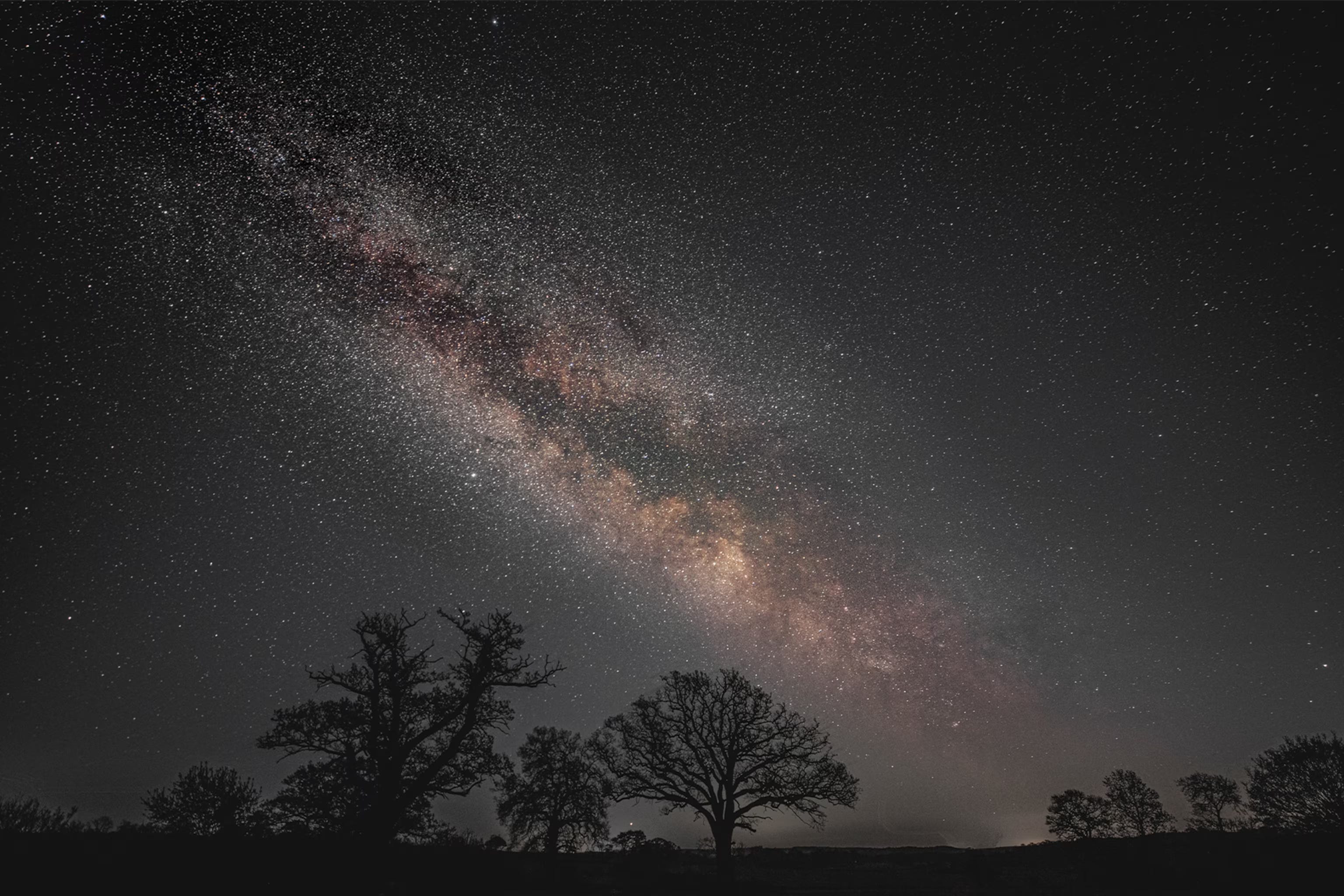
Who has never stared up at the night sky in awe, wondering where those distant lights come from or how long they have traveled to reach us?
Since the dawn of civilization, scientists, writers, storytellers and entire cultures have looked to the stars as a source of knowledge, spirituality and inspiration.
But this simple and profoundly human experience is now being stolen from us on a global scale.
Just try it yourself the next time you have the chance: look up at the night sky and see how different it has become. Bright little objects slowly drift across your field of view. They are so small, yet so bright that, for astronomy novices like me, it is often impossible to tell them apart from the stars.
They are Starlink satellites.
As a human being, I feel there is no escaping technology anymore. Wherever I go from now on, I will feel its presence, pulling me away from the moment I am trying to live. A constant, painful reminder of just how far Elon Musk’s influence now reaches into our everyday lives.
As a parent, I feel even more outraged knowing that my six-year-old son, and every generation that comes after him, will never experience a pristine night sky, free of artificial satellites.
Starlink and its parent company, SpaceX, with the backing of the U.S. government, are wrecking our night sky.
And this is only the beginning.
Satellites, Data Centers and Mirrors in Space
Starlink is the world’s largest satellite megaconstellation. Launched in 2019, it has already deployed more than 10,000 satellites into low Earth orbit (around 500 kilometers above Earth) to provide high-speed Internet access across the globe.
The company ultimately plans to deploy around 42,000 satellites, with each new generation becoming larger and brighter than the last.
Despite multiple warnings and studies from astronomers, Starlink has become so profitable that it has triggered a race to imitate it. More than 30 satellite megaconstellations are now under development, and experts expect more than 100,000 satellites to eventually populate low Earth orbit by 2030. Over a longer period, it could be millions.
Adding to this are plans to develop orbital data centers to power the growing demands of artificial intelligence. SpaceX alone has proposed to deploy up to one million of them.
A recent study looking at all these projects predicts “devastating consequences for astronomy” and indicates that: “for a large fraction of each night, hundreds of satellites would be visible and, at certain times, up to several thousand, similar to the number of stars seen with the naked eye in good conditions.”
The latest assault on the night sky comes from Reflect Orbital, which wants to send some 50,000 mirrors into space to reflect sunlight onto specific areas of Earth at night.
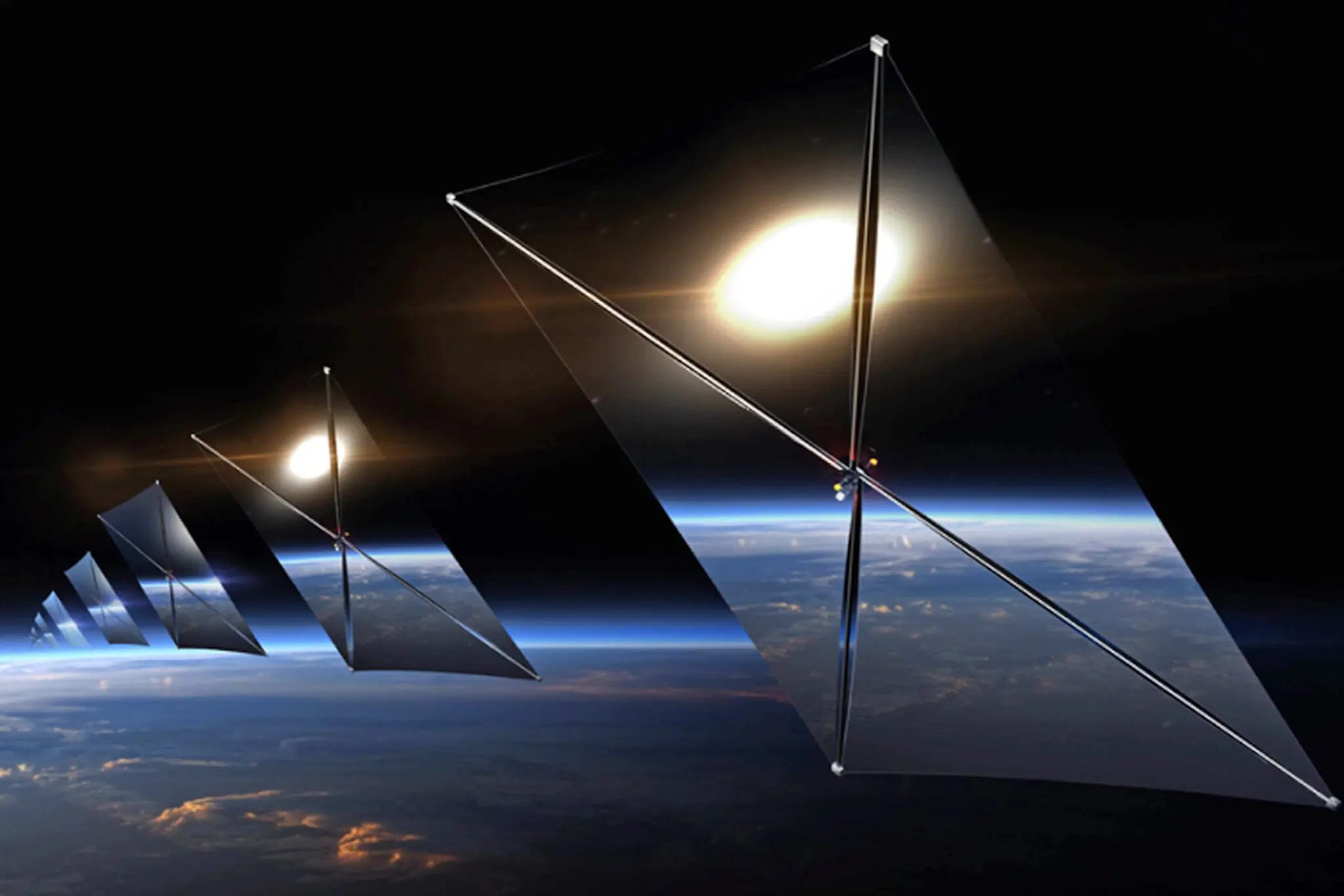
The California-based company claims its technology is clean, will extend working hours and boost agricultural yields. What the company deliberately ignores is that launching rockets and burning discarded objects in the atmosphere is anything but green, that longer working hours are hardly the solution to our economic problems, and that the world already produces enough food to feed everyone.
It’s not the economy, it’s the distribution, stupid.
Reflect Orbital also says its technology will illuminate disaster zones and search-and-rescue operations. This is nothing more than corporate spin designed to present the technology as benevolent and necessary, even though floodlights mounted on cranes, poles or drones can already provide the same service without filling orbit with thousands of mirrors.
SpaceX relies on the same kind of rhetoric to justify Starlink, despite the fact that much of the world is already highly connected through fiber-optic networks and 5G, which are far less environmentally damaging.
One study suggests that satellite constellations can generate six to eight times more CO₂ emissions per user than some terrestrial networks.
Furthermore, geostationary satellites, operating at an altitude of 36,000 kilometers, can provide global Internet coverage with just a handful of satellites.
The trade-off is about half a second of additional latency.
Sure, that is inconvenient if you want to play online games from a remote beach or a mountain trail. But is that really a good enough reason to pollute the atmosphere and sacrifice our night sky?
Or, as one French astronomer put it, are we really prepared to “lose our night sky simply to reduce the latency of online games or to send each other even more cat photos?”
The FCC is to blame
None of these corporate projects would be possible without the approval and encouragement of the U.S. Federal Communications Commission (FCC).
But instead of slowing projects that are increasingly harming the environment and astronomy, the FCC now wants to accelerate them. On July 22, it will vote on a plan to overhaul its satellite and earth station licensing process by creating what it calls a “licensing assembly line.”
The goal is clear: to speed up the approval of satellite megaconstellations and strengthen the position of American space corporations.

In the words of FCC Chairman Brendan Carr, a Trump-appointed MAGA zealot: “The United States sits at the dawn of a new Golden Age of space innovation... We are going big to make sure that the U.S. is the friendliest regulatory environment in the world for space innovators and entrepreneurs.”
In other words: deregulation.
As always, whenever governments want to pass business-friendly policies, they use terms like “simplification”, “flexibility”, “modernization” or “cutting red tape”.
But behind this language often lies another objective: weakening rules and regulations put in place to protect consumers and the environment from corporate excesses.
The FCC’s plan is no different. It appears particularly well suited to the needs of SpaceX and its Starlink constellation, giving the company greater freedom to launch more rockets and put more objects into orbit, at the expense of the environment and the communities living near spaceports.
This, however, is hardly a priority for Carr and the Trump administration, whose hostility towards environmental and climate regulation is well documented.
As a federal agency, the FCC is subject to the National Environmental Policy Act, or NEPA, which requires it to consider the environmental consequences of its decisions.
For megaconstellations, the FCC has relied on an exemption dating back to 1986, when these massive satellite networks did not exist, to avoid detailed environmental reviews of the systems it approves.
“It’s definitely fair to say that we are looking at a much different type of activity now” says an analyst from the Secure World Foundation. “Things have changed since 1986, and it is perfectly reasonable to ask the FCC to review this exemption.”
Even the U.S. Government Accountability Office (GAO) found that the agency had failed to properly justify this approach and called on it to review whether licensing constellations of thousands of satellites could really be assumed to have no significant environmental effects.
The FCC agreed to act. More than three years later, it still has not fully addressed the GAO’s recommendations, despite numerous calls by leading astronomers.
In their letter to the FCC, they state: “We can bring the world online without the unknown environmental harms of satellite megaconstellations. The FCC should coordinate closely with the Environmental Protection Agency, NASA, and other national and international regulators to require extensive environmental reviews for the new space age.”
“We’re in a short window of time when we can prevent making a mess of space and our atmosphere rather than spend decades cleaning it up.”
But instead of first figuring out what thousands of rockets and falling satellites are doing to our atmosphere, the FCC now wants to approve them even faster.
Furthermore, rather than strengthening oversight as the orbital environment becomes increasingly congested, the FCC proposes to replace much of its traditional scrutiny with a system based on permission-less innovation, self-certification and private coordination between operators.
However, loosening the rules too much could backfire on the one thing the space industry really cares about: growth.
As Holger Krag, head of the Space Safety Program at the European Space Agency, puts it: “The more objects you have in space, the more collisions among them become likely.”
And there is already a lot to collide with.
According to ESA’s estimates, around 50,000 objects larger than 10 centimeters are currently in orbit around Earth. There are also an estimated 1.2 million pieces of debris larger than one centimeter and 130 million larger than one millimeter.
At orbital speeds of 40,000 km/h, even a tiny fragment can cause serious damage and shatter a satellite or rocket body into thousands of new pieces, which in turn become threats to other objects.
In the 1970s, NASA scientist Donald Kessler described how collisions in orbit could eventually trigger a chain reaction: more debris causing more collisions, producing even more debris. The scenario later became known as the Kessler Syndrome, and it is one of the space community’s worst nightmares
The consequences of such a chain reaction would render orbits unusable and extend far beyond the space industry. Modern societies rely on satellites for navigation, weather forecasting and many other services.
And if access to orbit became severely restricted, our ability to launch new scientific missions and explore the Universe could also be affected.
There is a bitter irony here.
By making space regulation faster and friendlier to business, the FCC may be helping to destroy the very environment on which that business depends.
Until then, the least we can do is refuse to bankroll this industry by choosing not to buy Starlink, and help ensure that future generations can still look up into the night sky and experience the grand spectacle that the Universe offers us.